In my last blog post,
I gave some "big picture" thoughts concerning the recent allegations
made against the Bible, by gay activist, far-left Progressive, and
atheist Dan Savage.
I suggested that his tone and rhetoric was one more example of the increase
in virulent, fundamentalist atheism in our country (and its acceptance
thereof), and that the Church needs to meet this challenge with love,
prayer, study and active evangelism.
(It is not necessary to read that last post to understand this one, for I will be quoting Dan directly).
In
this post, however, I will be zeroing in on some of the specific
problems Dan has with the Biblical text and seeing what various scholars
have to say about his particular claims.
But, before I do that, I want to make something clear from the onset:
I
do not pretend to believe that Dan Savage's disgust with Holy Scripture
has anything to do with what he thinks it says about slavery.
In other words, if every supposed "pro-slavery" passage in Scripture was removed, he would find something else to harp on.
Why is this?
Because the Bible condemns Dan's homosexual lifestyle choice.
That is not to say that Dan chose to have same-sex attraction (which I don't believe), rather that he chooses to a gay lifestyle, to please his flesh, in the same way that some with SSA choose to live a celibate lifestyle, out of obedience to God.
I
think that Dan and I are in agreement that the only thing standing in
the way of total acceptance of the homosexual lifestyle in the United
States is the Word of God, and that once the Bible is removed from its
place of respect, then the floodgates will open and Dan's position on
homosexuality will be the cultural norm.
That is why Dan hates the Bible.
(Not
to mention the message of hope for people with same-sex attraction [and
those without], found on the pages of Scripture, which directly
contradicts his world-view).
With that in mind let's look at some of Dan's claims:
"We ignore bull**it in the Bible about all sorts of things. The Bible is a radically pro slavery document. Slave-owners waved Bibles over their head during the Civil War and justified it". (emphasis mine)
He then goes on to say, "The
shortest book in the New Testament is a letter from Paul to a Christian
slave owner about owning his Christian slave. And Paul doesn't say
'Christians don't own people', Paul talks about how Christians own people".
As
you can see these are pretty steep charges against the Bible, charges
that I believe are based on ignorance of some very key things, crucial
to understanding the biblical teachings correctly.
The New Testament and Slavery-
Dan indicts the Apostle Paul for not saying "Christians don't own people", in one of the letters Paul wrote to a Christian slave-owner named Philemon.
But before we examine the book of Philemon, let's look at what the New Testament actually has to say about slavery.
Dr. Paul Copan, who has a Phd. in philosophy with an emphasis in philosophy of religion, addresses this very issue:
"Though critics claim New Testament writers keep quiet about
slavery, we see a subtle opposition to it in various ways.
We can
confidently say that Paul would have considered antebellum slavery with
its slave trade to be an abomination — an utter violation of human
dignity and an act of human theft.
In Paul’s vice list in 1 Timothy
1:9,10, he expounds on the fifth through the ninth commandments (Exodus
20; Deuteronomy 5).
There Paul condemns “slave traders” who steal what
is not rightfully theirs.
One
question that remains, however, is that if Paul would have opposed the
Southern slave trade, if he were alive then, why does the New Testament
seem so quiet about slavery abolishment?"
Let's read further, again from Dr. Copan:
"Critics wonder why Paul or New Testament writers (cp. 1 Peter
2:18–20) did not condemn slavery and tell masters to release their
slaves.
We need to first separate this question from other
considerations.
New Testament writers’ position on the negative status
of slavery was clear on various points: (a) they repudiated slave
trading; (b) they affirmed the full human dignity and equal spiritual
status of slaves; (c) they encouraged slaves to acquire their freedom
whenever possible (1 Corinthians 7:20–22); (d) their revolutionary
Christian affirmations, if taken seriously, would help tear apart the
fabric of the institution of slavery, which is what took full effect
several centuries later — in the eventual eradication of slavery in
Europe; and (e) in Revelation 18:11–13, doomed Babylon (the world of
God-opposers) stands condemned because she had treated humans as
“cargo,” having trafficked in “slaves [literally ‘bodies’] and human
lives” (verse 13, NASB). (emphasis/underline mine)
This repudiation of treating humans as cargo
assumes the doctrine of the image of God in all human beings."
So
in the New Testament we see a ringing condemnation of the very core of
slavery, as it was understood in South and elsewhere.
Furthermore, Dr. Glenn Sunshine expounds on the folly of immediate abolitionism in Roman times:
"Christianity has in fact been history’s major force for the freeing of
slaves. Immediate abolition was realistically impossible in New
Testament times: The Romans would have treated it as insurrection, and
the inevitable bloodshed to follow it would have produced greater evil
than would have been alleviated by abolition.
The injunction to “obey”
was thus temporary and contextual. It was also tempered with
instructions to masters to treat slaves reasonably, as fellow human
beings. Eventually slavery “virtually disappeared” from Europe under
Christianity’s influence, as social historian Rodney Stark stated in “For the Glory of God: How Monotheism Led to Reformations, Science, Witch-Hunts, and the End of Slavery” (p. 299)."
Rather
than (1.) blithely going around shouting "free the slaves", which would
have resulted in a bloody and immediate put-down, leaving those in in
servitude worse off than they were before, or (2.) developing an
ethic of "how Christians own people", as Dan suggests is the case in
Scripture, Paul and other biblical authors advocate that slaves should
be treated absolutely the same as anyone else, that they should take hold of freedom if possible, and that to treat a slave or any person in such a manner as to disparage their God-given dignity is sinful.
It is these principles that would eventually lead to the abolitionist movements in Europe and the United States.
Philemon and Onesimus-
For
my readers who are not Christians, the book of Philemon concerns a
slave (Onesimus) who runs away from his Christian slave-owner (Philemon)
and becomes Christian himself, as a result of meeting Paul the Apostle.
Now
while Dan is right that Paul doesn't use the words "Christians don't
own people" when talking to Philemon, no honest person could construe
his words to Philemon as pro-slavery.
In the book (only one chapter long) Paul implores Philemon to accept Onesimus unto himself as a "beloved brother" not a slave (v.16), to "welcome him" as he would Paul, as a "partner"; (v.17).
Here is further insight from Copan:
"Paul,
who had declared that in Christ there is “neither slave nor free”
(Galatians 3:28), could appeal to Philemon based on (a) Paul’s personal knowledge of Philemon (who wasn’t a physical threat to Onesimus—which Exodus 21:16
presumes); (b) the spiritual debt Philemon himself owed Paul; and (c)
the new brotherly relationship in Christ between Onesimus and Philemon. (empahsis/underline mine)
presumes); (b) the spiritual debt Philemon himself owed Paul; and (c)
the new brotherly relationship in Christ between Onesimus and Philemon. (empahsis/underline mine)
Thus Paul elsewhere can appeal to Christian masters—who have
their own heavenly Master—to treat their slaves justly, impartially, and
without threatening (Ephesians 6:9; Colossians 4:1). And if slaves can
gain their freedom (1 Corinthians 7:21), Paul encouraged this"
their own heavenly Master—to treat their slaves justly, impartially, and
without threatening (Ephesians 6:9; Colossians 4:1). And if slaves can
gain their freedom (1 Corinthians 7:21), Paul encouraged this"
This was not a treatise on how Christians "own people", but a description of how Christians are to treat people--all people--regardless of their status, slave or free.
So
we can see that Bible is not a "radically pro-slavery document" or a
"pro-slavery document" at all, in any sense, as Dan contends.
One
is left to wonder if this step-by-step approach to slavery also taken
by Abraham Lincoln, would have branded Lincoln "radically pro-slavery"
in the eyes of Dan Savage?
Christian Anti-Slavery Leaders-
Space
does not permit me to expound on the massive effect that the Bible had
on the anti-slavery movement in Europe and the U.S., but I do want to
highlight believing men and women who took up their "Swords" (Hebrews
4:12; Ephesians 6:17) and fought for the dignity of all of God's creatures.
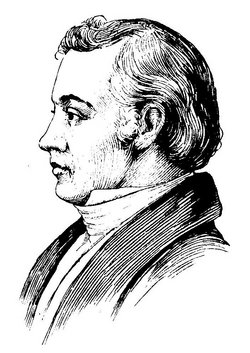 | ||
| Elijah Parish Lovejoy (November 9, 1802 – November 7, 1837) was an American Presbyterian minister, journalist, newspaper editor and abolitionist. He was brutally murdered by pro-slavery mob in Alton, Illinois during their attack on his warehouse to destroy his press and abolitionist materials. (Wikipedia) |
 | |
| Charles Grandison Finney (August 29, 1792 – August 16, 1875) In addition to becoming a popular Christian evangelist, Finney was involved with the abolitionist movement and frequently denounced slavery from the pulpit. In 1835, he moved to Ohio where he became a professor and later president of Oberlin College from 1851 to 1866. Oberlin became active early in the movement to end slavery and was among the first American colleges to co-educate blacks and women with white men. (Wikipedia) |
 | |
| Harriet Beecher Stowe (June 14, 1811 – July 1, 1896) was an American abolitionist and author. Her novel Uncle Tom's Cabin (1852) was a depiction of life for African-Americans under slavery; it reached millions as a novel and play, and became influential in the United States and United Kingdom. It energized anti-slavery forces in the American North, while provoking widespread anger in the South. (Wikipedia) |
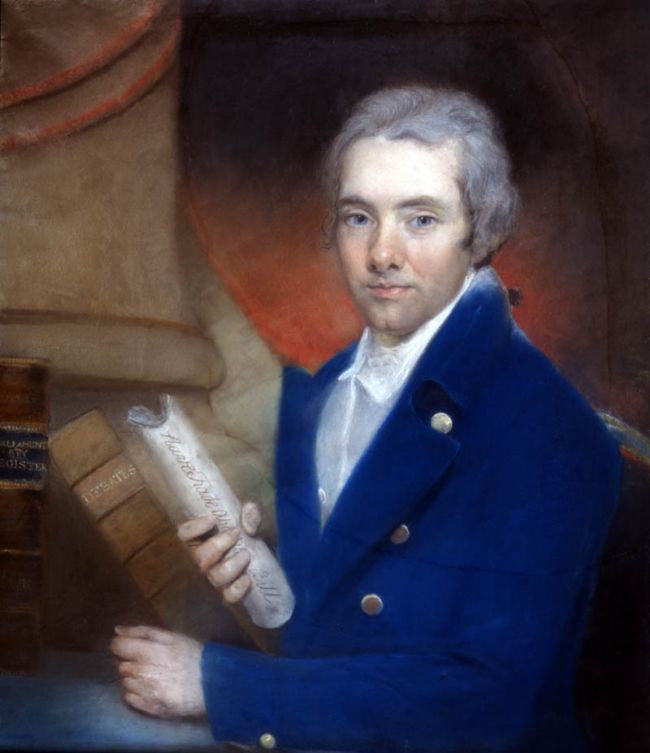 |
| William Wilberforce (24 August 1759 – 29 July 1833) was a British politician, philanthropist, and a leader of the movement to abolish the slave trade....In 1785, he underwent a conversion experience and became an evangelical Christian, resulting in major changes to his lifestyle and a lifelong concern for reform....and he soon became one of the leading English abolitionists. He headed the parliamentary campaign against the British slave trade for twenty-six years until the passage of the Slave Trade Act of 1807. (Wikipedia) |
There are hundreds of others, but I think you get the picture.
Conclusion-
Hundreds
of books and articles have been written on the subject of the Bible and
slavery, on both sides of the issue so for Dan Savage, a sex-columnist,
to think that he can just proclaim that the Bible supports slavery is
naive at best, but I think we've shown that it is also untrue.
As evidenced by his proof-texting of Deuteronomy 22:13-21, Dan
shows himself unable or unwilling to make the distinction between
prescriptive laws ("thus sayest the Lord") and descriptions of
laws, and God's temporal and specific commands, versus general and fixed
ones.
Christians
must understand that the world will not sit calmly as we explain the
biblical positions on contentious issues as long as the "Savage
Mentality" spreads.
The New Atheists are only concerned with the eradication of religion, not the truth about God or Bible doctrines.
While
we know that in the end there pursuits will prove vain, undoubtedly
many will be duped into believing the muck that has been raked onto the
inspired text of Scripture and be led astray.
It
is our job to convey to the world what the Bible actually says about
these subjects and so much more, so that we can remove the veil of moral
and intellectual superiority from the eyes of fundamentalist atheists
and show them their sin so that he may be saved.
This is a tall order, but by the grace and power of God it is possible.
Sources used:
I'd also recommend this longer refutation of Mr. Savage: http://www.youtube.com/watch?v=uxIWf7qrcZM

