I distinctly remember listening to the decidedly conservative video teacher for my highschool homeschool history curriculum carefully explain to his eager history students how the American Revolution was not unbiblical.
Being religiously conservative myself, we agreed on much, but this time I found myself utterly perplexed as he tried to settle the issue with a broad appeal to the corrupt British government.
Well, okay, I thought, but if corrupt government is grounds for revolution, what does it mean that all governments are corrupt, to some extent?
Also, wasn't the government which Paul lived under when he wrote "be subject to those in authority" corrupt too?
At the time, I shrugged my shoulders and moved on with my life, not knowing I would revisit this question and a host of others about the intersect between my faith and politics in the years to come.
In one sense, what I am writing matters little because the American Revolution was over 200 years ago.
At the same time, the principles that make the revolution contrary to the call of Christians as articulated in the Bible, are for all times and people and thus distinctly relevant for us today.
One of the three of those principles is found in Romans 13:1-5:
Let everyone be subject to the governing authorities, for there is no authority except that which God has established. The authorities that exist have been established by God. Consequently, whoever rebels against the authority is rebelling against what God has instituted, and those who do so will bring judgment on themselves. For rulers hold no terror for those who do
right, but for those who do wrong. Do you want to be free from fear of the one in authority? Then do what is right and you will be commended. For the one in authority is God’s servant for your good. But if you do wrong, be afraid, for rulers do not bear the sword for no reason. They are God’s servants, agents of wrath to bring punishment on the wrongdoer. Therefore, it is necessary to submit to the authorities, not only because of possible punishment but also as a matter of conscience.
This passage does not teach absolute obedience, due only to God, but means unless the government commands you to do something you cannot do without violating God's commands, you are not justified in disobeying the government, which is exactly what the Colonists did.
In fact, no justification is ever given for the act of revolution, even when the government is telling you to do something which you can rightly disobey.
The government of Rome in Paul's day was surely as corrupt as the English government and, yet, he still issued and followed this command, under the direction of the Spirit.
The second principle is found in Romans 12:17-21, one chapter prior:
Do not repay anyone evil for evil. Be careful to do what is right in the eyes of everyone. If it is possible, as far as it depends on you, live at peace with everyone. Do not take revenge, my dear friends, but leave room for God’s wrath, for it is written: “It is mine to avenge; I will repay,” says the Lord. On the contrary:
“If your enemy is hungry, feed him;
if he is thirsty, give him something to drink.
In doing this, you will heap burning coals on his head.”
Do not be overcome by evil, but overcome evil with good.
Replete with instructions and examples of how Christians should treat their enemies and resolve conflict, the New Testament is silent about the justifiableness of Christians going to war.
Indeed, filling the New Testament's silence on any Christian just war ethic is a deafening call for non-violence and peacemaking.
In place of violently overthrowing the government and subsequently killing the "enemy" in defense of ourselves, we are told to not repay evil with evil, to do what is right (which we saw previously involves obedience to government),to live at peace (the opposite of going to war), to not take revenge, to trust in God's justice, and to treat our enemies well.
None of these values or practices aligns with the sanguinary and peaceless American Revolution.
Thirdly and finally, we return to Romans 12, picking up where we left off with verses 6-7:
This is also why you pay taxes, for the authorities are God’s servants, who give their full time to governing. Give to everyone what you owe them: If you owe taxes, pay taxes; if revenue, then revenue; if respect, then respect; if honor, then honor.
One of the Colonists' most notable grievances against King George and the British Monarchy was taxation without representation.
However, echoing Jesus' words to "give to Caesar what is Caesar's", Paul makes the argument for why Christians should pay their taxes.
Rather than complain, vandalize, rebel, or refuse to pay, even if the system of taxation is unfair--as it was both for the Colonists and early Christians, neither of whom were properly represented by their government and who were often burdened by undue taxation--we obey, not of deference for an unjust government, but out of reverence for a just God who uses government for His purposes.
Recognizing this, understand that the reason fighting the American Revolution was unscriptural, was because it replaced the Colonists' responsibilities to their God with the sacrifice of human life on the altar of war in worship of the false gods of liberty, freedom, and self-government.
This is not something any follower of Christ should celebrate.
(But that doesn't necessarily mean we cannot enjoy the fireworks!)

Search This Blog
Monday, July 4, 2016
Monday, June 27, 2016
Strange Flesh: A Conservative Christian in the Midst of Gay Pride.
In February of 2014, I stood with my parents in the Capitol of my home state of Illinois to rally against a measure to legally recognize same-sex marriage in the state.
Months later we experienced crushing
defeat when the same-sex marriage bill passed through the Illinois
legislature, a local defeat soon felt by traditional marriage supporters
nationwide as the Supreme Court of the United States ruled in favor of the
legal recognition of same-sex marriage.
Two days ago, nearly one year after
this monumental decision, I found myself at a Gay Pride parade in the sprawling
metropolitan city of Cincinnati, Ohio.
What changed?
Well, what has not changed is my
view on sexual ethics and God’s desire for human beings thereof.
I believe, as the Bible teaches, it
was the intent and purpose of God in creation to bring together the two halves
of the sexual spectrum, male and female, in a life-long, life-giving, and
loving union, or else keep them chaste as they follow Him in celibacy (Matthew
19; 1 Corinthians 7).
Anything else is verboten.
However, some things have changed,
and the same year I participated in that pro-marriage rally, I experienced a
radical religious conversion and bid farewell to political involvement in its
entirety.
With that came much soul-searching
about how much of my views on homosexuality and culture were rooted in the
Bible and how much in socially conservative politics.
--back to the Pride parade.
Recently, in talking with a young LGBT
man and professing Christian about our differing views on sexuality and
Scripture, he suggested I visit a Pride event to get a more rounded
understanding of our country’s gay subculture with a view of relating better to
LGBT people.
While I had a (negative) idea of
what such an event would look like and was apprehensive to enter a potential
lion’s den, I was providentially afforded the opportunity to attend
Cincinnati’s Pride Parade not too long after this conversation and decided I
could not pass it up.
What I saw left me overcome with
emotion.
Firstly, I was struck by how
successful the gay rights movement has been in achieving its stated goals.
Capitalizing on the egalitarian
impulses and the social constructionist gender theories of the Sexual
Revolution of the 60s and Second Wave feminism, what was once considered by virtually
all people of power and influence as socially taboo behavior, is quite broadly
accepted and only growing in acceptance.
Furthermore,
the movement has effectively appropriated the black struggle for civil rights
by appealing to widespread sympathies hereof and the desires of a generation
to, this time, be on the “right side of history.”
Secondly, I was
weighed down by what was simply a very open and proud (if I can do some word
appropriating of my own) celebration of sin.
I know this
will strike some as harsh and that is not my intention.
But whether or not
you believe, as I do, that the Scriptures are divinely authoritative, you
cannot deny we are seeing a monumental departure from anything resembling
scriptural teachings, including the teachings of Jesus on marriage, and, as a
follower of Jesus, this fills me with grief.
That said,
those were not the most impactful of my experiences.
I felt
out-of-place, like people could see right through me and knew why I was there,
and that I was unwelcome.
This was
most certainly a projection of my own feelings onto the other parade-goers who
surely did not even notice me (not to mention, I received only positive
feedback when I did interact with anyone).
However, I was
floored by the realization that the way I felt this one time at this one parade
is probably the way a great many of the LGBT people in attendance feel almost
all the time in public.
As I moved
among the crowd, my discomfort fading as I faded in the throng, I looked at the
people’s faces--the gay high school aged boy with his friends, the trans man,
the lesbian couple, the older attendees with their partners.
My heart
began to ache as I realized an event like this might be the only place where
they feel safe and secure—where they can feel they can be themselves.
Even now, I
wonder how many have been rejected by family or friends, how many left their
churches, how many live a secret life, how many long to feel at home with
themselves without fear of reprisal.
The
consideration was overwhelming.
I mentioned
earlier changes I had processed within myself after setting aside politics.
One of those
was a shift from treating gay people like enemies and instead as neighbors who
need the saving grace of Jesus Christ and the Good News of his coming Kingdom
just as much as I or anyone else.
Does it
really bother us that LGBT folks are taking refuge in the world and running
from the Church?
Does it break
our hearts that the heart of Jesus, once a safe haven for those on the margins of his
society, is missing in so many of our churches?
Does it
matter to us that we so often cannot see past debates about bathrooms and moral
campaigns to “reclaim” our country to care we are driving LGBT people from the
Kingdom of God in exchange for the political power Jesus rejected?
If I learned
anything from this experience it is that I am 100% more committed to “being all
things” to my LGBT neighbors, so they can feel at home in the Church of Christ
and know the freedom, not that the world offers, but that only comes when we
surrender ourselves to Jesus.
I fully understand most will reject this message (Matt. 7:13-14).
Assuredly,
many will find it patronizing, untrue, restrictive, offensive, and unappealing.
Notwithstanding,
I believe the wonderful truth of who Jesus Christ is—his promised coming,
impeccable life, impeachable teachings, sacrificial death, miraculous
resurrection, and glorious return—has the power to change even the most
hardened of hearts (Romans 1:16; 1 Corinthians 1:18).
We need to
remember God is not calling gay people to become straight; He is calling
stressed-out, burned-out, busy Americans with our smartphones, IPads, frappes, schedulers,
one-night stands, depression, anxiety, materialism, shame, fear, and longing
for something more out of life to His Kingdom, to His heart (2 Corinthians
5:20).
The question
is will you and I—LGBT, same-sex attracted, or straight—answer His call for ourselves and then help others do the same?
God helping us, we will.
Monday, April 4, 2016
Why I Said Goodbye to Most of my Clothes: A Minimalist Anabaptist Journey
| From a favorite movie of mine, "Confessions of a Shop-a-holic". |
Since becoming a pacifist and politically neutral, I naturally gravitated toward the theological community known as the Anabaptists ("re-baptizers", so named for their practice of baptizing those who had been "baptized' as infants) who resurrected these key biblical doctrines long after they were driven underground for twelve centuries.
The Anabaptists, along with their spiritual cousins the Quakers and Brethren, championed a practical Christianity based on Scripture alone, rooted in Jesus, and manifested in a heightened concern for peacemaking, social service, moderate stances toward government, modest living, and the like.
They were weirdos of their day who refused to take oaths, serve in the military, work in government, use egotistical titles, tip their hats or bow before royalty, or adopt modern fashion.
On the other side, minimalism, not an inherently Christian concept, concerns with living within one's means (economically, spatially, consumptionally, etc.) and not owning more than what you need to function.
This less is more (or, better, less is enough) mentality stands in stark contrast to a Western emphasis on materialism and gain.
Among the many things these two distinct schools of thought have in common is a less than popular approach to clothes.
Unsurprisingly, minimalism focuses on how much clothing we have versus how much we need to have a functional wardrobe (no more and no less).
This "wear to live, not live to wear" ethic flies in the face of fashion magazines, department stores, and our own closets.
Echoing this practical approach to clothes, an Anabaptist would also note how the type or style of clothing we own is just as important as how much of it we have and would advocate for a plain, modest style that leaves ample room for the Spirit to shine and wards against vanity and classism.
Taken together the two are a perfect complement.
Being convicted about the nature and number my clothes for some time now, I finally raided my closet determined to do some paring down.
| Several examples of modern approaches to plain or simple dress. |
Simply put, this is one of several Quaker testimonies or principles for Christian living, this one focusing on living a simple life to prioritize what is most important.
Clothing was one part of this simplicity testimony and I decided I too wanted a simple wardrobe that was plain, functional, and minimal.
The criteria for keeping or tossing clothes were generally as follows:
Did I wear it? Clothes are meant to be worn, not hoarded. If I was not wearing it, I did not need it.
Was it functional? This criteria was to identify a practical purpose for any clothes I wanted to keep, in place of mere want or enjoyment. For example, I knew I needed clothes for cold and warm weather, clothes to bike and run in, clothes to sleep in, and church clothes. (I already had a work uniform).
Did it cover? I had two shirts I was determined to keep that I wore often and which were plain in color. Score! The only problem is they were V-necks. While they were not "deep Vs", they still did not align with the testimony of simplicity I was aiming for. A less complicated, but harder choice was getting rid of my well-loved and only pair of short-shorts. Sigh.
Was it flashy? Pieces with lots of "flare" or obvious "look at me" appeal had to go. This meant anything with writing on it.
Could it be better used by someone else? This applied mostly to my t-shirts, most of which were not keeping with my Testimony of Simplicity, but which I planned on keeping to make a quilt out of. Did I really want to rip them up so I could sleep next to them or would it be better if someone who needed clothes could wear them?
Using these criteria, the result was 35 articles donated, 10 t-shirts for a quilt, and 9 articles for the garbage, a total of 54 articles gone.

This left me with
5 shirts,
two pairs of pants, and
one pair of shorts, plus
one suit I bought for collegiate debate,
my white t-shirts,
a pair of swim trunks,
a pair of athletic shorts,
a pair of sweat pants, and
a pair of flannel pajama pants.
Woah.
As I looked at my mostly bare closest, I was able to better process the ways worldly ideas of fashion and ownership had influenced me.
Some clothes I wanted to keep simply because someone had complimented me in them or because I thought I looked good wearing them, even if they were not modest.
With other things, it felt weird to get rid of them because they were not functional, even if they did fit my Testimony of Simplicity.
I also wondered if I had traded the witness of some of my Christian themed t-shirts for a mute witness of drab clothes.
However, at the end of it all, I felt great.
Yes, it was hard to part with some of my clothes, but I appreciated that someone else might be able to use them.
And the idea of not worrying about what I would wear in the morning was a surprising weight off my shoulders.
Beyond that, I felt like this was my way of telling the world my priorities are not its priorities.
Who I am will not be defined by what I wear, but by good works (1 Timothy 2:9-10) and the hidden person of the heart (1 Peter 3:4), for God looks at the heart (1 Sam. 16:7).
I was officially bowing out of the rat race of trying to look the best.
My hope is that this change will allow me to focus on what is most important instead of personal vanity (1 Sam 16:7), fight against the world's obsession with appearances and status (James 2:1-4), and free myself up to spend money on furthering God's Kingdom (Matt 6:19-21).
This is not about legalism----no one has the same Testimony--nor earning God's favor.
It is not really even about clothes.
This is the start of discovering and walking in the ethos of New Testament Christianity, particularly in those areas Evangelicals have tended to neglect, so I can better be the hands and feet of Jesus in the world.
Sunday, December 27, 2015
Rebeldes Sin Causa: The Problem with the Black Lives Matter Movement
The Black Lives Matter Movement (BLMM), borne of the rage of George Zimmermann's acquittal, represents one of American's most toxic sociopolitical phenomena, expertly playing on people's fear and fighting battles that don't exist.
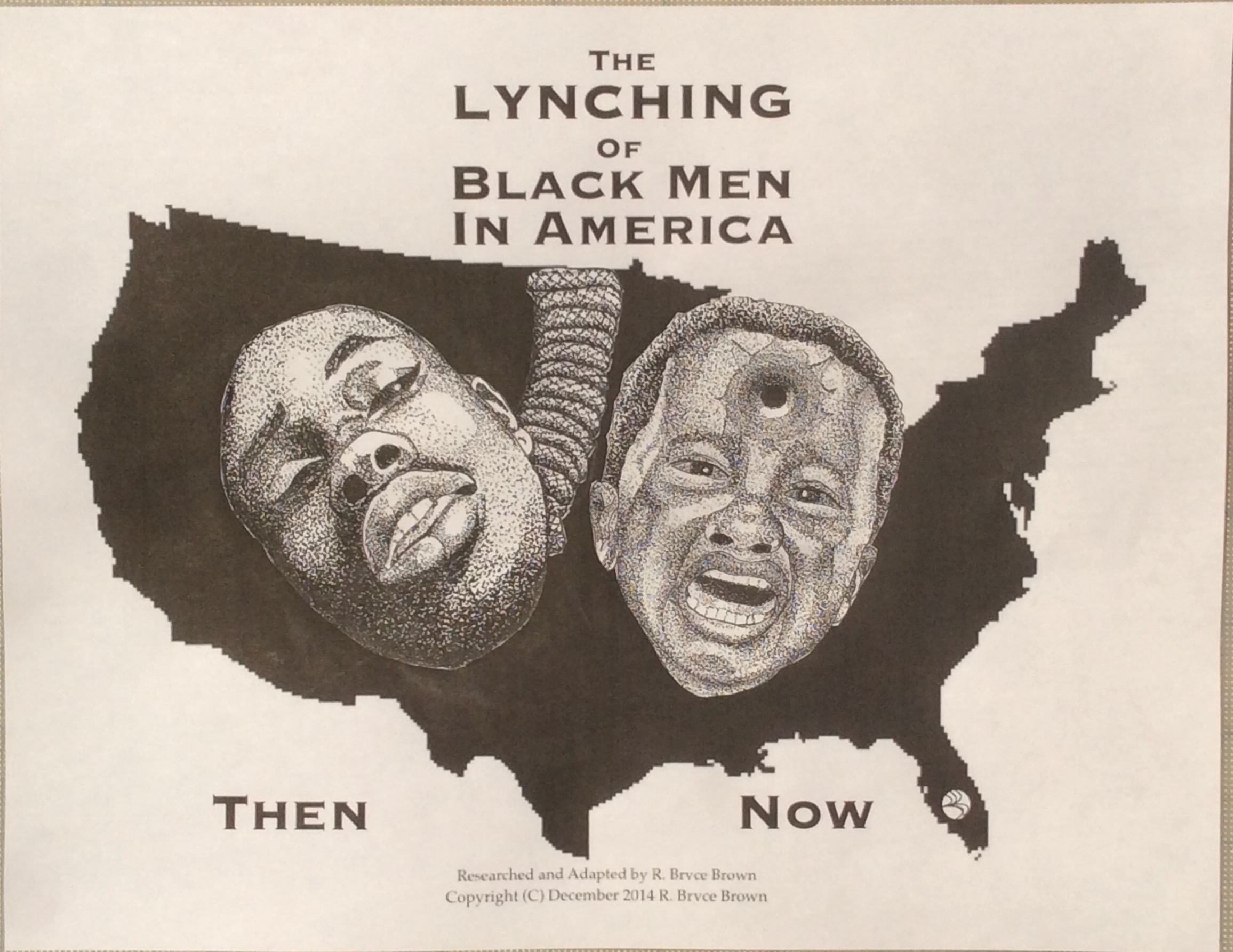
The clearest example of this is the movement's pervasive and egregious use of America's propensity towards police violence to "prove" every black man has something to fear from police whenever he exits his home.
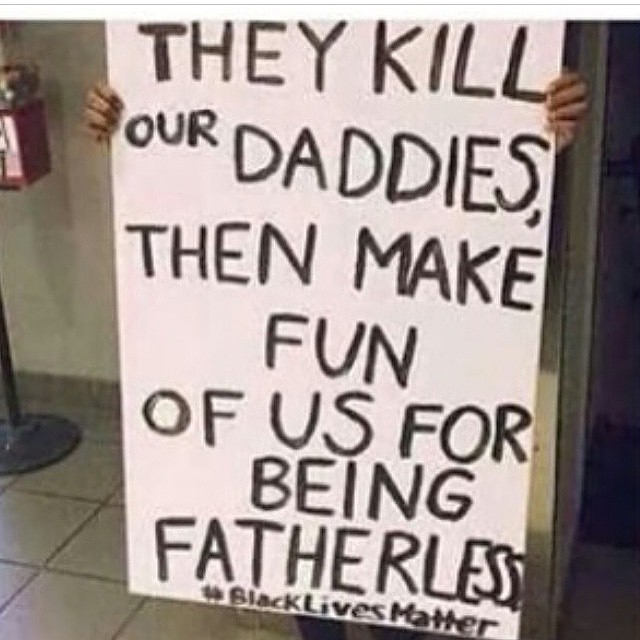
In support of this baseless thesis, The Chicago Tribune ponders a police war on black men, a New York Times article on the BLMM blanketly reads "Stop Killing Us", and too many accept outrageous quotes like, "they kill our daddies, then make fun of us for being fatherless" as deep nuggets of wisdom.
The problem is none of these concerns correspond to reality.
I will be the first to say the deaths of men like Eric Garner, Eric Harris, Freddie Gray, Tamir Rice, and Walter Scott were grievous miscarriages of justice.
In general, the startling quickness with which the United States police force uses lethal means to resolve conflict, in contrast to de-escalation strategies employed by law enforcement agencies in other developed nations, deeply disturbs me.
Yet and still, black men are not being shot dead in the streets for being black.
In fact, black men are not simply being shot at all, if they are not committing a crime.
Even in the cases just mentioned, Eric Garner resisted arrest, Eric Harris ran from police, Freddie Gray ran from police, Walter Scott ran from police, and Tamir Rice was waving around a dummy pistol.
We see acts of confrontationalism or non-compliance by the victims in nearly all the controversial shootings used by the BLMM as proof of police racism.
They cast young men like Nicholas Robertson, Laquan McDonald, and Mario Woods as innocent victims of an out-of-hand police force because they were moving away from police before being unloaded upon, but neglect to mention Robertson was carrying a gun, and Woods and McDonald were brandishing knives.
The operant factor in all these lethal confrontations is not race, but that the victim had committed a crime and refused to be taken into custody.
Control for that fact and where do all the black deaths at the hands of police officers go? Or the white deaths for that matter!
Does resisting arrest justify death ipso facto? NO. Of course not. I cannot say this forcefully enough.
But what the BLMM refuses to come to grips with is that we have every reason to believe if these men had complied with police orders, allowed arrest, dropped their weapons, and/or not broken the law in the first place, they would still be alive today.
I say this with confidence because what we do not see is exactly what the BLMM says is happening: an "open season" on black men where everyone has something to fear.
Rather the way to avoid being killed is to avoid breaking the law, whether by not resisting arrest or doing something that would warrant arrest.
Instead of teaching respect for the law, an achievable solution, the BLMM would rather re-fight the Civil Rights Movement of the 1950's and put chips on people's shoulders that have the opportunity to turn any routine police stop into a Sandra Bland fiasco.
By avoiding real solutions in place of a fake war with the police, the BLMM relinquishes the opportunity for progression, because while you cannot just change an officer's reaction, you can control your actions.
If these tragic deaths have taught us anything, if it is your life versus a police officer's life and you are doing something wrong, he is going to air on the side of his life and you may die, so do not do wrong.
While the deaths of black men at the hands of white police officers is the rallying point of the BLMM, it is not their only concern.
However, whether it's housing, unemployment, the war on drugs, mass incarceration, or education, the MO remains the same: shift the blame to a white power structure stacked against black people, wresting power from the hands of the only ones who can actual solve the problems: the people themselves.
For this reason, I submit we do not need a BLMM.
In its nearly four year lifespan, it has achieved little more than disruption, agitation, marginalization of frustrated white people, and de-powerment of black youth, with rare exception and outliers.
Just like Planned Parenthood does not equal women's healthcare, the BLMM does not equal black welfare and likewise does not merit the support of any Christian for its feckless and divisive tactics.
You want to help at-risk young black men? Build healthy Christian communities, encourage abstinence until marriage (single parenthood is crippling the black family), volunteer at or start a 4-H Club, sports team, Boy Scout troop, or youth group.
Be a mentor, a tutor, a Boys and Girls Club volunteer.
Assist a single mother, visit the local jails, help out at your local school, be an encouragement, rally against gang violence.
Be vulnerable, pray with and for young men and invite them into your homes.
Model Christ in all your efforts.
That is how you make a difference while the Black Lives Matter folks are busy fighting for equality by shutting down airports.
The clearest example of this is the movement's pervasive and egregious use of America's propensity towards police violence to "prove" every black man has something to fear from police whenever he exits his home.
In support of this baseless thesis, The Chicago Tribune ponders a police war on black men, a New York Times article on the BLMM blanketly reads "Stop Killing Us", and too many accept outrageous quotes like, "they kill our daddies, then make fun of us for being fatherless" as deep nuggets of wisdom.
The problem is none of these concerns correspond to reality.
I will be the first to say the deaths of men like Eric Garner, Eric Harris, Freddie Gray, Tamir Rice, and Walter Scott were grievous miscarriages of justice.
In general, the startling quickness with which the United States police force uses lethal means to resolve conflict, in contrast to de-escalation strategies employed by law enforcement agencies in other developed nations, deeply disturbs me.
Yet and still, black men are not being shot dead in the streets for being black.
In fact, black men are not simply being shot at all, if they are not committing a crime.
Even in the cases just mentioned, Eric Garner resisted arrest, Eric Harris ran from police, Freddie Gray ran from police, Walter Scott ran from police, and Tamir Rice was waving around a dummy pistol.
We see acts of confrontationalism or non-compliance by the victims in nearly all the controversial shootings used by the BLMM as proof of police racism.
They cast young men like Nicholas Robertson, Laquan McDonald, and Mario Woods as innocent victims of an out-of-hand police force because they were moving away from police before being unloaded upon, but neglect to mention Robertson was carrying a gun, and Woods and McDonald were brandishing knives.
The operant factor in all these lethal confrontations is not race, but that the victim had committed a crime and refused to be taken into custody.
Control for that fact and where do all the black deaths at the hands of police officers go? Or the white deaths for that matter!
Does resisting arrest justify death ipso facto? NO. Of course not. I cannot say this forcefully enough.
But what the BLMM refuses to come to grips with is that we have every reason to believe if these men had complied with police orders, allowed arrest, dropped their weapons, and/or not broken the law in the first place, they would still be alive today.
I say this with confidence because what we do not see is exactly what the BLMM says is happening: an "open season" on black men where everyone has something to fear.
Rather the way to avoid being killed is to avoid breaking the law, whether by not resisting arrest or doing something that would warrant arrest.
Instead of teaching respect for the law, an achievable solution, the BLMM would rather re-fight the Civil Rights Movement of the 1950's and put chips on people's shoulders that have the opportunity to turn any routine police stop into a Sandra Bland fiasco.
By avoiding real solutions in place of a fake war with the police, the BLMM relinquishes the opportunity for progression, because while you cannot just change an officer's reaction, you can control your actions.
If these tragic deaths have taught us anything, if it is your life versus a police officer's life and you are doing something wrong, he is going to air on the side of his life and you may die, so do not do wrong.
While the deaths of black men at the hands of white police officers is the rallying point of the BLMM, it is not their only concern.
However, whether it's housing, unemployment, the war on drugs, mass incarceration, or education, the MO remains the same: shift the blame to a white power structure stacked against black people, wresting power from the hands of the only ones who can actual solve the problems: the people themselves.
For this reason, I submit we do not need a BLMM.
In its nearly four year lifespan, it has achieved little more than disruption, agitation, marginalization of frustrated white people, and de-powerment of black youth, with rare exception and outliers.
Just like Planned Parenthood does not equal women's healthcare, the BLMM does not equal black welfare and likewise does not merit the support of any Christian for its feckless and divisive tactics.
You want to help at-risk young black men? Build healthy Christian communities, encourage abstinence until marriage (single parenthood is crippling the black family), volunteer at or start a 4-H Club, sports team, Boy Scout troop, or youth group.
Be a mentor, a tutor, a Boys and Girls Club volunteer.
Assist a single mother, visit the local jails, help out at your local school, be an encouragement, rally against gang violence.
Be vulnerable, pray with and for young men and invite them into your homes.
Model Christ in all your efforts.
That is how you make a difference while the Black Lives Matter folks are busy fighting for equality by shutting down airports.
Friday, September 25, 2015
Bill Nye and Why Some People Have Nothing to Add to the Abortion Debate
[As is not infrequently the case, what began as a late night Facebook response grew into a a blog length post. I hope this is of use to someone.]
Bill Nye has decided to step out of his area of expertise and opine on the issue of abortion. Those of us who care about the right to life of unborn human beings welcome his participation in this discussion and the opportunity to use his comments on abortion as a springboard for conversation.
Here is my response to selected portions of the short video he did arguing against the pro-life position:
1. "Many...more hundreds of eggs are fertilized than become humans."
At this point in 2015, with all the great technological and scientific advantages of our day to help us better understand human life and development, it is hardly worth noting that life begins at conception/fertilization because anyone who bothers to read anything of relevance on the issue either knows this fact or is lying about not knowing it. See for example the following:
“Fertilization – the fusion of gametes to produce a new organism – is the culmination of a multitude of intricately regulated cellular processes.” [Marcello et al., Fertilization, ADV. EXP. BIOL. 757:321 (2013)]
Declarations like these are common place in academic papers and textbooks on the relevant issues related to human life and development.
The unborn is human because it is the product of human sexual reproduction (which results in new human beings) and it is a life as it exhibits irritability (reaction to stimuli), metabolism (converting food to energy), and cellular reproduction (growth), among other things:
"Living things consist of protoplasm and exhibit the following features: metabolism, growth, reproduction, feeding, excretion, irritability and movement. " (A Textbook of Science for Health Professionals, Hinwood, 1997, 250)
So when Nye talks about fertilized eggs becoming humans he is either (1.) ignorant of this basic fact of biology that eggs at conception/fertilization are complete humans and no longer eggs, not becoming human at a later point, or (2.) is being willfully deceitful. Neither option bodes well for him.
2. "...but that's not all you need, you have to attach to the uterine wall."
Nye is not clear on what he means by "all you need." All you need for what? To become human? Nope. We already saw fertilization has accomplished that process.
The process he is talking about is implantation, which is considered by many scientists and health professionals as the beginning of pregnancy, not human life. (To see more on this discussion: Practical Decision Making in Health Care Ethics, Devettere, 2009, 232)
3. "...if you’re going to say when an egg is fertilized, it therefore has the same rights as an individual, then whom are you going to sue? Whom are you going to imprison? Every woman who’s had a fertilized egg pass through her? Every guy who’s sperm has fertilized an egg and then it didn’t become a human?"
What is absolutely stunning about this argument isn't simply its complete lack of intellectual capital, but that it is presented with the air of being some great, knock-down argument against human rights for all humans.
In the law, we make distinctions all the time between the intentional, unlawful killing of human beings and natural deaths outside our control.
For example, before Roe v Wade and in no country today where abortion is illegal is a woman penalized for having a miscarriage.
So, why would any mildly intelligent person ever think that recognizing the human rights of a human being would mean we'd have to criminalize spontaneous abortions that take place at any time in a woman's pregnancy or any other manner of natural, unavoidable death that might overtake a new human being in its earliest stages of development?
We are not given the answer. Instead, we are assured those who think human rights begin with human life are ignorant of science. Well, the facts speak for themselves.
As for ascribing human rights to the unborn (a philosophical, not scientific judgement), philosopher Dr. Gary Gutting notes the following:
"The basic problem is that, once we give up the claim that a fertilized egg is a human person (has full moral standing), there is no plausible basis for claiming that all further stages of development are human persons. The DNA criterion seems to be the only criterion of being human that applies at every stage from conception to birth."
In other words, if human rights are not the property of living human beings by that fact alone, no consistent basis exists for protecting the child in the womb even seconds before birth or for laws that criminalize fetal death (such as in the case of the physical abuse of a pregnant woman).
But don't worry about all that stuff! Just keep beating the "you're anti-science" drum!
The rest of the video isn't worth my time or yours.
With the characteristic neuroticism of the militant secularism Nye represents, he takes a random side-swipe attack on the Bible.
What the Bible has to do with recognizing the immorality of abortion, I'm not sure and Nye does not care to explain. For someone who talks a lot about science and facts, Nye seems to be at a loss for both.
Maybe he should check out our friends at Secular Pro-Life and Pro-Life Humanists. Or, heck, listen to the countless secular arguments against abortion put forth by *gasp* religious people!
Beyond that, if Nye means to suggest my belief in Scripture leads me to believe children should be loved and cared for, not wantonly chopped to pieces or starved or poisoned (as happens in abortion procedures), consider me guilty as charged.
Finally, let me note, I have many pro-choice friends, whom I respect.
This post is not an attack on you. It's not even an attack on Bill Nye.
It is an attempt to illustrate that even someone who calls himself a "the science guy" and gives off the most repugnant aura of intellectual superiority utterly fails at defending the indefensible, which is the killing of unborn children.
He doesn't even get close.
What does that tell us?
Bill Nye has decided to step out of his area of expertise and opine on the issue of abortion. Those of us who care about the right to life of unborn human beings welcome his participation in this discussion and the opportunity to use his comments on abortion as a springboard for conversation.
Here is my response to selected portions of the short video he did arguing against the pro-life position:
1. "Many...more hundreds of eggs are fertilized than become humans."
At this point in 2015, with all the great technological and scientific advantages of our day to help us better understand human life and development, it is hardly worth noting that life begins at conception/fertilization because anyone who bothers to read anything of relevance on the issue either knows this fact or is lying about not knowing it. See for example the following:
“Fertilization – the fusion of gametes to produce a new organism – is the culmination of a multitude of intricately regulated cellular processes.” [Marcello et al., Fertilization, ADV. EXP. BIOL. 757:321 (2013)]
Declarations like these are common place in academic papers and textbooks on the relevant issues related to human life and development.
The unborn is human because it is the product of human sexual reproduction (which results in new human beings) and it is a life as it exhibits irritability (reaction to stimuli), metabolism (converting food to energy), and cellular reproduction (growth), among other things:
"Living things consist of protoplasm and exhibit the following features: metabolism, growth, reproduction, feeding, excretion, irritability and movement. " (A Textbook of Science for Health Professionals, Hinwood, 1997, 250)
So when Nye talks about fertilized eggs becoming humans he is either (1.) ignorant of this basic fact of biology that eggs at conception/fertilization are complete humans and no longer eggs, not becoming human at a later point, or (2.) is being willfully deceitful. Neither option bodes well for him.
2. "...but that's not all you need, you have to attach to the uterine wall."
Nye is not clear on what he means by "all you need." All you need for what? To become human? Nope. We already saw fertilization has accomplished that process.
The process he is talking about is implantation, which is considered by many scientists and health professionals as the beginning of pregnancy, not human life. (To see more on this discussion: Practical Decision Making in Health Care Ethics, Devettere, 2009, 232)
3. "...if you’re going to say when an egg is fertilized, it therefore has the same rights as an individual, then whom are you going to sue? Whom are you going to imprison? Every woman who’s had a fertilized egg pass through her? Every guy who’s sperm has fertilized an egg and then it didn’t become a human?"
What is absolutely stunning about this argument isn't simply its complete lack of intellectual capital, but that it is presented with the air of being some great, knock-down argument against human rights for all humans.
In the law, we make distinctions all the time between the intentional, unlawful killing of human beings and natural deaths outside our control.
For example, before Roe v Wade and in no country today where abortion is illegal is a woman penalized for having a miscarriage.
So, why would any mildly intelligent person ever think that recognizing the human rights of a human being would mean we'd have to criminalize spontaneous abortions that take place at any time in a woman's pregnancy or any other manner of natural, unavoidable death that might overtake a new human being in its earliest stages of development?
We are not given the answer. Instead, we are assured those who think human rights begin with human life are ignorant of science. Well, the facts speak for themselves.
As for ascribing human rights to the unborn (a philosophical, not scientific judgement), philosopher Dr. Gary Gutting notes the following:
"The basic problem is that, once we give up the claim that a fertilized egg is a human person (has full moral standing), there is no plausible basis for claiming that all further stages of development are human persons. The DNA criterion seems to be the only criterion of being human that applies at every stage from conception to birth."
In other words, if human rights are not the property of living human beings by that fact alone, no consistent basis exists for protecting the child in the womb even seconds before birth or for laws that criminalize fetal death (such as in the case of the physical abuse of a pregnant woman).
But don't worry about all that stuff! Just keep beating the "you're anti-science" drum!
The rest of the video isn't worth my time or yours.
With the characteristic neuroticism of the militant secularism Nye represents, he takes a random side-swipe attack on the Bible.
What the Bible has to do with recognizing the immorality of abortion, I'm not sure and Nye does not care to explain. For someone who talks a lot about science and facts, Nye seems to be at a loss for both.
Maybe he should check out our friends at Secular Pro-Life and Pro-Life Humanists. Or, heck, listen to the countless secular arguments against abortion put forth by *gasp* religious people!
Beyond that, if Nye means to suggest my belief in Scripture leads me to believe children should be loved and cared for, not wantonly chopped to pieces or starved or poisoned (as happens in abortion procedures), consider me guilty as charged.
Finally, let me note, I have many pro-choice friends, whom I respect.
This post is not an attack on you. It's not even an attack on Bill Nye.
It is an attempt to illustrate that even someone who calls himself a "the science guy" and gives off the most repugnant aura of intellectual superiority utterly fails at defending the indefensible, which is the killing of unborn children.
He doesn't even get close.
What does that tell us?
Tuesday, September 22, 2015
What's a Christian to Do with the Pope?
This post is not for them.
This post is for those non-Catholic Christians, particularly those in the Christian Churches/Churches of Christ, who may wonder what to make of all the hullabaloo in light of Catholic and Restoration Movement differences.
Maybe more than any Pope in recent memory, Francis has captured the attention and hearts of folks beyond the ecclesial reach of the Roman Catholic fellowship, capitalizing on the growing trend away from factionalism/denominationalism in Evangelicalism.
I am one of those Protestants impressed with the self-effacing demeanor and actions of this Pope and his personable manner of speaking and being.
There's a simplicity about him that is attractive, especially as important a figure as he is.
However, the differences between the Catholic Church and the independent Christian Churches did not change when Francis became pope.
For those of us Christians who stand in the heritage if the Restoration Movement, doctrines like believer's baptism, the supreme authority of the Bible alone, the autonomy of the local church, biblical eldership, the priesthood of all believers, the sinfulness of sectarianism, and more make coƶperation with Catholics on issues of Christian faith and life difficult if not unwise.
Thus, what are some tools that might help us balance our personal positive appraisal of Pope Francis and disagreement with the institution he represents?
Firstly, let's remind ourselves that doctrine still matters.
Doctrine is not abstract. Doctrine is what separates the Westboro Baptist Church from the Amish
Doctrine is simply a word to describe the truths particular to our faith.
For all his genuine humility and kindness, Pope Francis is a man who takes upon himself names like Holy Father and Vicar of Christ, while we understand Christ as the sole head of the Church (Eph. 5:23; Col 1:18), God as the only Holy Father (John 17:11; see also: Matthew 6:9), and the Holy Spirit as the Vicar of Christ (John 15:26, 16:7).
This is an important doctrinal difference.
He also believes and teaches Christ is present body, blood, soul, and divinity in the elements of communion.
This is more than the Communion wine simply being the literal blood of Jesus and the bread being his literal flesh (1 Cor. 10:16); this is a doctrine that sees the divine person of Christ himself in the Eucharist in such a way that the "host" is "adored" and put in a special tabernacle inside of the nave of the church.
The priest (which Francis is), takes upon himself the name of Alter Christus (another christ; see: Matt 24:5 for how Scripture speaks of other Christs), "celebrates" (to use Catholic terminology) a Mass believed to be propitiatory (something that satisfies the demands of God) re-presentation of the sacrifice of Jesus on the cross such that it were Jesus himself, not the priest, who was offering himself up.
![]() |
| The Catholic priest is said to act in the person of Christ during the Mass. |
For us, this is blasphemy (see Exodus 20:4; Hebrews 7-10), a massive show of idolatry at the heart of the Catholic faith.
This is true with or without Pope Francis.
Secondly, we need to remember our brothers who have left the Catholic Church.
I have met and talked with many Christian Church/Church of Christ people who were once Roman Catholics.
They each have their own stories. Some sacrificed much to be immersed into Christ as adults. Some are still praying for Catholic friends and relatives that they will undergo the change they have.
When Christians, whether in our our movement or not, glom on to Pope Francis without restraint or pretend the differences between Catholics and Christians (of the RM) don't exist, we disrespect their journeys and devalue the truth behind their change.
The fact is, there are differences. And when someone recognizes this and still chooses to come to Christ in the Church of Christ, this should temper any potential over-enthusiasm with the Pope or his church that may dishonor the work Christ has done in their lives.
Thirdly, we need to listen to our brothers and sisters in countries like Italy and in Latin America, where Catholicism is the religion de jour, who are telling us to be sober-minded.
A joint statement titled “Roman Catholicism in Evangelical Perspective” written by a consortium of Evangelical denominations in Italy says as much. They write:
...it is incompatible with the teaching of Scripture to have a church whose heart is a political state that is a legacy of an “imperial” church from which it has inherited titles and prerogatives. Christian churches must refrain from imitating “the princes of this world” and follow the example of Jesus who came to serve and not to be served (Mark 10:42-45).
...what appear to be similarities with the evangelical faith and spirituality of sectors of Roman Catholicism are not in themselves reasons for hope in a true change.
All the standing theological and ethical differences considered, they cannot initiate nor advocate for ecumenical initiatives with regard to the Roman Catholic Church.
[We] invite all evangelicals at the national and international levels to exercise a healthy biblical discernment (1 John 4:1) without falling into unionist initiatives that are contrary to Scripture and instead renew their commitment to take the gospel of Jesus Christ to the whole world (Matthew 28:18-20).
Whether you agree with the statement or not, we owe it those believers who are fighting it out in the thick of Catholic land to listen to and consider their concerns.
Finally, when I express admiration for Pope Francis, some of my Evangelical friends get antsy, while my Catholic friends become hopeful, but neither reaction is warranted because the reasons I like him and other Catholics like Oscar Romero, Greg Boyle, Gustavo GutiƩrrez, and Miriam Heidland have nothing to do what makes them good Catholics, but because they show Christ in many of the things they say and do.
We can appreciate Francis's Christlikeness and recognize the truth when he speaks it while still respectfully disagreeing with some of the doctrines of his church.
I hope these emphases will help guide you and I as we follow the Pope's American tour.
Friday, September 18, 2015
#IStandForNothing: A Case Study in Manufactured Outrage
The Bible says nothing is new under heaven, but I cannot
help but think something is special about the way 21st
century Americans have perfected faux outrage.
From Michael Brown to Kim Davis, to college classrooms and the halls of government, non-issues are regularly transformed into front page news.
Take, for example, the
latest case of imagined injustice, Ahmed Mohamed and his clock.
Fourteen year old Mohamed (a brown-skinned Muslim—this will be important in a
moment) brought a homemade digital clock to school, intending to
show it to his engineering teacher.
However, after a
school official became concerned the contraption was perhaps not what
the student claimed, someone called the police, who subsequently detained,
interrogated, and released Mohamed with no charges filed, his story
having checked out.
Maybe
at one time this
could have been a simple case of “oops” or a sad example of how violence has
changed the atmosphere of the American classroom, but this is where Mohamed's
race and faith come in, because quickly the story became about
police
heavy-handedness, Islamophobia, and racism
Activists,
politicians, and ordinary citizens took to Twitter with the hashtag
#IStandWithAhmed to denounce the obvious racial/ethnic profiling of this young man
whose only crime was being brown and having an Arab last name.
Except none of this
was true.
Yes, Ahmed is Muslim
and, yes, he has dark skin, but that his detainment was race-based is without any basis in fact.
First of all,
according to the New York Times, Mohamed was discovered with the device
in his English class after the teacher heard it make a beeping noise.
The teacher,
apparently interested in what the out-of-place beeping in her
classroom was, questioned Mohamed who produced his homemade clock.
Now when I think of
a digital clock, this is what I think of:
This is Mohamed's
clock:
Now you tell me: if
you're an English teacher who must decide if a “metal
briefcase-style box, [with] a digital display, wires and a circuit
board...bigger and bulkier than a typical bedside clock, with cords,
screws and electrical components” (according to the NYT
description) is actually what the child who brought it says it is and
not some kind of explosive, what would you do?
Well, this teacher,
faced with uncertainty, aired on the side of caution and the
authorities were contacted.
Now some folks
claiming racism argue proper protocol was not followed and that if
the boy was really a threat, why not evacuate the school?
In other words,
because the teacher or police did not go far enough, this is somehow proof they racially profiled of Mohamed.
And if you think you
can't take their word for it, you now have a better idea of how
the English teacher at Mohamed's school felt.
Finally, after the police investigation, Mohamed was released.
As I look at the
stream of articles and posts trying to make Mohamed's situation, unfortunate as it is, something it's not, I cannot help
but be disgusted.
Some folks are genuinely concerned about possible
prejudice, but others are
part of the growing class of professional Twitter activists, online
lynch mobs, and racialists who decide before-hand what is true without compulsion to calmly consider the facts and weigh the
alternatives.
Listen clearly:
“this wouldn't have happened if he was white” is a claim, not
evidence in support of a claim.
What happened here was the American system of law and justice at work. Mohamed is alive, free, and will be meeting with the President.
If this is racism, that word means nothing any more.
Understand, no one is
safer or better off when we cannot even cut our teachers enough slack to
appreciate that they refuse to take chances with the lives of their
students, especially against the backdrop of mass school killings.
This teacher saw
something, so she said something. And if she had kept her mouth shut and it had been a bomb, who would write articles praising
her decision to take a teen with a suspicious device at his word? Who
would tweet out her name or call her a hero?
I am weary of these
self-serving #hashtag justice campaigns that cast good
judgement to the wind and solve problems that aren't there.
Every day each of us
is faced with real tangible ways to make a difference and, if you're
a follower of Jesus, an eternal difference for good.
So, for your sake and mine, can we start working on issues that exist, instead of
expending energy on ones that don't?
Subscribe to:
Posts (Atom)