A reading from the book of Jonah chapter 1:
In my distress I called to the LORD ,
and he answered me.
From the depths of the grave I called for help,
and you listened to my cry.
3 You hurled me into the deep,
into the very heart of the seas,
and the currents swirled about me;
all your waves and breakers
swept over me.
4 I said, 'I have been banished
from your sight;
yet I will look again
toward your holy temple.'
5 The engulfing waters threatened me,
the deep surrounded me;
seaweed was wrapped around my head.
6 To the roots of the mountains I sank down;
the earth beneath barred me in forever.
But you brought my life up from the pit,
O LORD my God.
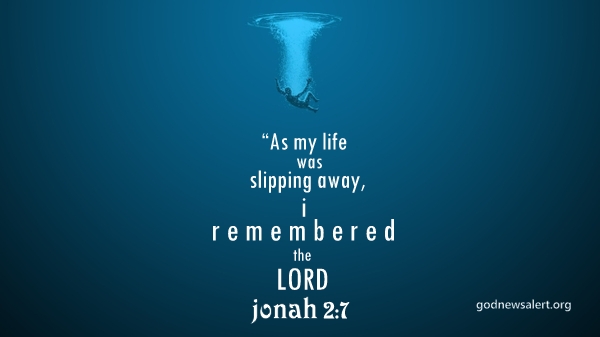
7 "When my life was ebbing away,
I remembered you, LORD ,
and my prayer rose to you,
to your holy temple.
8 "Those who cling to worthless idols
forfeit the grace that could be theirs.
9 But I, with a song of thanksgiving,
will sacrifice to you.
What I have vowed I will make good.
Salvation comes from the LORD ."
When my mother shared with me my grandmother's request that I say few words at her funeral service, I was both humbled and burdened.
I was humbled because, as with so many things, even in her death, my grandma was showing that...
she believed in me.
she supported my desire to minister and preach the gospel.
even though she never had the chance to hear me preach in a church setting like this, she was proud of me.
And as I reflect on this, I doubt she ever knew how much that meant to me.
Yet, I was also burdened by the task of taking
eighty-eighty years of life,
eighty-eighty years of impact,
eighty-eighty years of faith,
and doing it any justice in a few short minutes.
And while I can't say I have it all figured out, I will do my best and trust these words would have blessed my grandmother.
When I think of my grandmother I think of flowers.
My grandmother loved flowers.
The outside of her home was decked out in flowers--on her porch, in hanging holders in front of her home, and in large pots at the end of her driveway.
Hibiscus. Daylilies. Japanese Lilies. You name it.
On more than one lazy homeschool day, my mom and I went to grandma's house to abscond bulbs from some of those beautiful flowers and plant them in our own yard, they were so pretty.
Grandma knew exactly what to plant and when, when this or that flower would come up, and just how to care for them.
So, when I think of Grandma, my mind flies straight to a familiar image: her big house in the country, the towering trees guarding the edges of her property, the cool breeze in the summer time, and lots of beautiful, colorful flowers.
Flowers just as beautiful and as colorful as she was.
When I think of my grandmother, I think of her love of animals.
If you wanted to bring out the tender and the feisty from my grandmother, you need only ask her about her deer.
Heaven help the hunter who dared bother a single deer that visited her yard (or who upset even the wild turkeys, for that matter).
I think of her bird-feeders and the time she excitedly beckoned me to her dining room window to catch a glimpse of a humming bird who had taken up temporary residence there.
I remember and laugh about her love-hate relationship with Molly, her husband's bulldog and my grandma's reluctant housemate for many years.
Most recently, I think about how in her final years of life, God gave my grandma a dog she loved as a precious companion.
When my grandma and her dog first came to have each other, I remember she told me the dog’s previous owners had called her Ariel.
Suddenly, with all the seriousness my grandma could muster, still not betraying the characteristic humor in her voice, she looked me in the eye and said:
We are not calling the dog Ariel.
And that is how Ariel came to be known as Lady.
Truly, when I think of how that dog was with my grandma when she needed her the most, from beginning to the end, she could have been called a Blessing from God.
When I think of my grandmother, I think of her cooking.
...Bless her heart.
Grandma’s cooking ran the gamut...quality-wise.
She made wonderful cheese balls, Chex mix, and puppy chow which I always looked forward to around the holidays.
However, the times Grandma stayed with us when my mom was hospitalized, let’s just say we ordered pizza more than once.
But more than her cooking, I think of family Christmases and Thanksgivings.
Her kitchen burst with as much family as with food, spilling over on to the couches in the living room , all the way on to the floor.
The air rang with a beautiful symphony of laughter and teasing and catching up.
And where was grandma?
Honestly, there was no telling.
Maybe she was in the kitchen making space for food or in the living room chatting, or...who knew, really?
She didn’t insert or assert herself; she just loved that we were all there.
She just loved us, her family.
For that reason when I think of my grandmother, I also think of her children, my parents and my aunts and uncles.
I think about their love for her and for each other.
It is a sibling kind of love to be sure, complete with ribbing and rivalries, (who could pretend otherwise) but each were present during this long year of my grandma's declining health.
In their own ways, each did what they could to help Grandma when the strength to help herself had long left her body (this includes those who lived states away).
And while not a single one of them would ever look for a back pat or a word of praise, their selflessness over the past few years, and especially in these last critical months, speaks volumes not only to their Christian character, but to the Christian character of the mother who raised them, the impact she had on them, and their love for her.
When I think of my grandmother, I think about the 17 grandchildren and great-grandchildren she left behind and their own testimonies of what she meant to them, two of which you can read yourselves:
Life will be so different now, especially when our family gets together.
-- She was never too embarrassed to sing "cha-cha-cha" in the car while pretending she had maracas,
-- she made it to every grandparents day at our school
-- she celebrated every victory, whether big or small, and made sure she mailed her cards in time for birthdays.
--she loved telling stories
-- she always talked quiet when she was telling you something important, and laughed whenever she was thinking ahead to another part of the story
We will always miss her and hold tight to the memories we have, especially the night she took my cousins, my brother John and I to the Virginia Theater while my cousin Courtney and I wore matching shorts that she made us I love the memories that we have, and that I was able to get here in time to hug her one more time.
And this one, as well:
I'll never forget the sleepovers, when she let me use her "fancy dishes" to make pudding and have tea parties, and every night that she read me the story of "Lara's Doll" from the Precious Moments Bedtime Storybook. She never minded that it was the only story I ever wanted to hear. She saw me, and she loved me. I got to hear her pray the last time we were together, and I'm so thankful that there's comfort in the fact that she's with Jesus now.
On that note, finally, when I think of my grandmother, I think most of her faith in God.
At the beginning of this meditation, we read a chapter from the book of Jonah which I believe contains one of the clearest presentations of the gospel of grace in the Old Testament:
"Those who cling to worthless idols
forfeit the grace that could be theirs.
9 But I, with a song of thanksgiving,
will sacrifice to you.
What I have vowed I will make good.
Salvation comes from the LORD ."
My grandma knew this truth. She lived it. And she wanted others to know and live it, too.
Her favorite passage of Scripture was John 3:16-17:
For God so loved the world that he gave his one and only Son, that whoever believes in him shall not perish but have eternal life. For God did not send his Son into the world to condemn the world, but to save the world through him.
Grandma had that life, that eternal life, which she lived out in word and deed.
No, she was not without sin, but it was for that very reason she exercised faith in Christ and was baptized into him for the forgiveness of her sins.
And you know something?
I will see my grandmother again.
The Bible says...
Brothers, we do not want you to be uninformed about those who sleep in death, so that you will not grieve like the rest, who are without hope. 14For since we believe that Jesus died and rose again, we also believe that God will bring with Jesus those who have fallen asleep in Him.
15By the word of the Lord, we declare to you that we who are alive and remain until the coming of the Lord will by no means precede those who have fallen asleep.
16For the Lord Himself will descend from heaven with a loud command, with the voice of an archangel, and with the trumpet of God, and the dead in Christ will be the first to rise.
17After that, we who are alive and remain will be caught up together with them in the clouds to meet the Lord in the air. And so we will always be with the Lord.
18 Therefore encourage one another with these words. -- 1 Thessalonians 4:13-18
When Jesus comes again, all the dead in him will return with him to the earth in glory.
We know this is true because it is the first of three great promises.
The first promise was that God would send his Son, the Messiah, to earth to redeem us back to God.
We celebrate the fulfillment of that promise this season during Christmas.
The second was that the Messiah would be slain and raised back to life on the third day, which we celebrate during Easter or Resurrection Sunday.
The third promise is that Jesus will come again to receive us unto himself.
The Bible says:
For no matter how many promises God has made, they are “Yes” in Christ. And so through him the “Amen” is spoken by us to the glory of God. -- 1 Corinthians 1:20
He said he would come and he came.
He said he would rise and he rose.
He said he would return and he will return.
And when he returns, my grandma will be with him to meet us.
I know more than anything she wanted this promise to be true for her family.
For that reason, my prayer is that those who have not yet chosen to follow Jesus as Lord would do so and that, in doing so, they would find the true source of life and strength that made grandma’s life and death so special.
The Bible says precious in the sight of the Lord is the death of one of his faithful servants (Psalm 116:15) and I know that includes my grandmother.
The legacy she left is more than any one memory or even a collection of memories; it is an eternal legacy of treasures stored up in heaven.
While it pains me she won’t be there to know I passed Greek or to see me get married or to move to Mexico, I know she believed in me.
Grandma believed in all us, her family, because she believed in what God could do through us.
May we all endeavor to live a life of such faith and impact.
In memory of my Grandma Barbara Anderson (March 20 1929- December 7 2017) until we meet again it the twinkle of an eye: